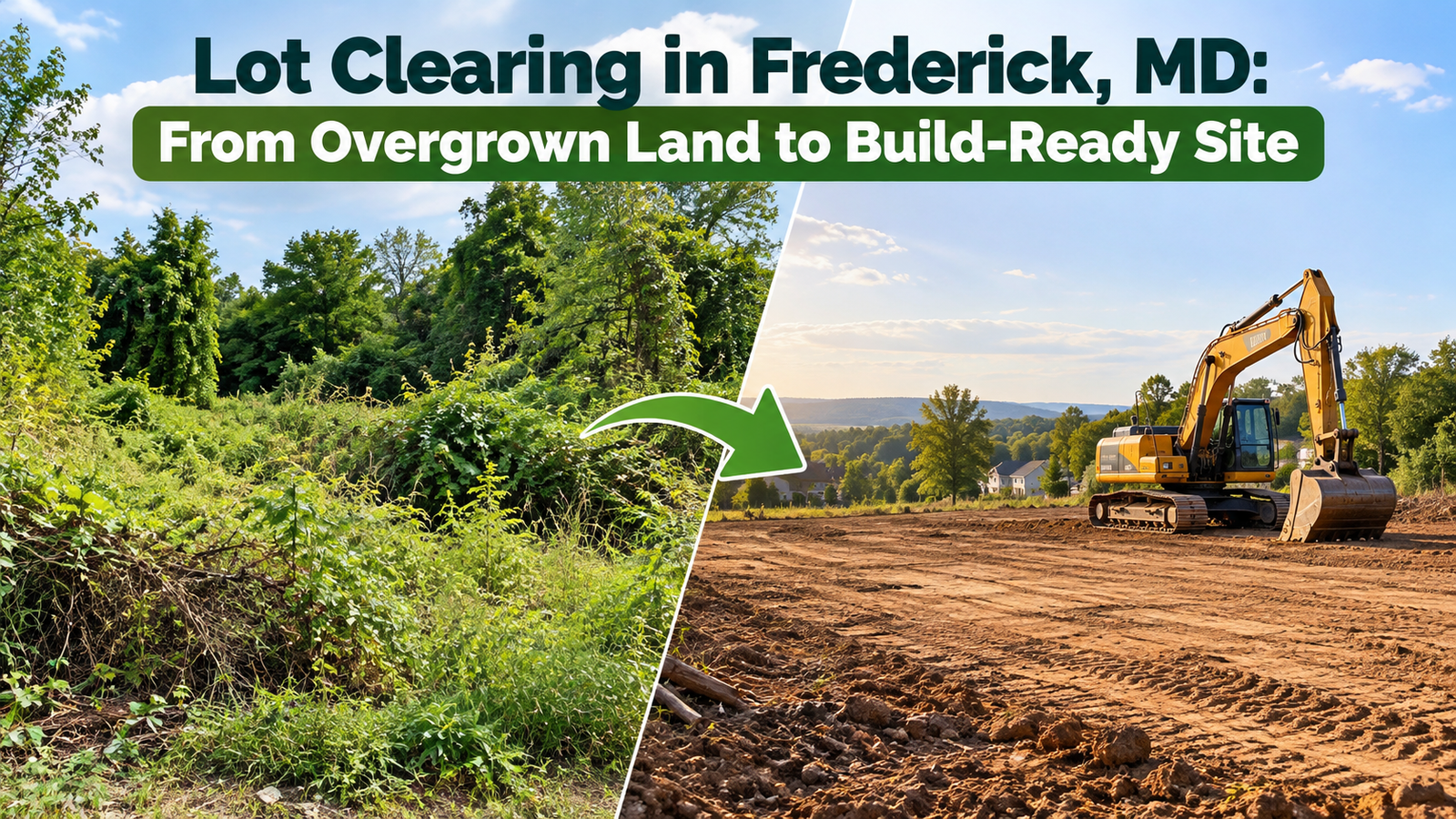
Lot clearing is the process of removing existing vegetation, debris, and surface obstacles from a parcel of land in preparation for construction or other use. In Frederick, Maryland, lot clearing Frederick can range from removing a few overgrown bushes on a suburban infill lot to clearing several acres of mixed forest on a development parcel at the city’s growing edges. The regulatory, environmental, and logistical considerations vary significantly with scale and location and understanding them before work begins prevents costly delays and compliance issues.
What Lot Clearing Involves
At its simplest, lot clearing involves removing all vegetation trees, shrubs, brush, weeds, and ground cover from the area to be developed. Beyond the vegetation itself, lot clearing frequently includes removal of old structures (sheds, fences, debris piles), removal of stumps to a specified depth below grade, and grubbing the removal of root systems from the cleared area.
Grubbing is distinct from simple clearing. Clearing removes above-grade vegetation; grubbing removes root systems and buried organic material below grade. If stumps and root systems are not removed, they decay over time and leave voids in the subgrade causing settlement in pavements, driveways, and slabs placed over them. For building pads and paved areas, full grubbing to a depth specified by the geotechnical engineer is required. For areas that will be landscaped or seeded, less aggressive stump and root removal may be acceptable.
Lot Clearing in Frederick’s Growth Areas
Frederick has experienced sustained residential and commercial growth for two decades, with development pressure particularly intense along the I-270 corridor and in planned development areas in the northern and southern parts of the county. Lot clearing for subdivision development typically involves clearing multiple adjacent parcels as part of a coordinated grading plan, with Forest Conservation Plans approved for the overall development area.
Infill development within the City of Frederick building on remaining vacant or underused lots within the established street grid typically involves smaller lot clearing projects. These projects may be subject to the City’s tree removal requirements even when they fall below the Forest Conservation Act thresholds for development-related clearing. The City of Frederick’s Tree Removal Permit process applies to removal of trees above a specified trunk diameter, regardless of whether the removal is associated with a development project.
Rural lot clearing for agricultural or rural residential purposes outside incorporated areas is subject to Frederick County’s Forest Conservation Ordinance when it involves conversion of forest. Agricultural operations have exemptions from some forest conservation requirements, but the exemptions have conditions and limitations that should be reviewed with Frederick County Planning before clearing.
Protecting Adjacent Property During Lot Clearing
Lot clearing on a parcel adjacent to existing development requires careful management to protect neighboring properties. Tree root zones extend well beyond the drip line typically 1.5 to 2 times the crown radius in healthy mature trees and compaction from equipment within the root zone can cause delayed tree death even when the tree itself appears to be outside the clearing area. Tree protection zones around trees to be retained on adjacent properties must be established with physical barriers (tree protection fencing) before equipment enters the site.
Utility lines both overhead and underground must be identified before clearing equipment is operated. Overhead lines adjacent to the lot can be struck by falling trees or equipment booms. Underground utilities in the lot (private utilities serving structures, service lines from the street) must be located through Miss Utility (811) notification before any grubbing or stump removal begins.
Stormwater management during clearing must protect adjacent properties from increased runoff. When a lot’s vegetation is removed, its runoff volume and velocity increase dramatically. Silt fencing and sediment barriers must be installed along the perimeter of the clearing area before work begins not after to intercept and filter runoff before it reaches neighboring properties or public roads.
Topsoil Management During Lot Clearing
Topsoil the organic-rich upper horizon of soil is a valuable resource that should be stripped and stockpiled separately during lot clearing rather than mixed with subsoil and fill. Frederick County’s soil profiles typically include 6 to 12 inches of A-horizon topsoil in agricultural areas, and less in previously developed or disturbed areas. Stripping this material separately preserves it for use as final cover in landscaped areas, which saves the cost of importing topsoil after construction.
Stockpiled topsoil must be managed for erosion control. Topsoil piles on an active construction site are a significant erosion source they are loose, organic, and easily mobilized by rainfall. Covering or seeding topsoil stockpiles with temporary vegetation, or wrapping them in filter fabric, prevents topsoil loss during the construction period.
Post-Clearing Stabilization Requirements
After lot clearing is complete, Maryland’s erosion and sediment control regulations require prompt stabilization of exposed soil. In Frederick County, the Soil Conservation District’s erosion and sediment control standards specify the required stabilization methods and timeframes. Areas cleared but not immediately graded must be mulched or seeded within a specified number of days typically 14 days for disturbed areas that won’t be worked for an extended period.
The stabilization requirement is not only regulatory it is practical. Bare soil on a cleared lot in Frederick’s wet climate will erode rapidly during fall and winter rain events. Eroded sediment reaching storm drains and waterways creates regulatory compliance problems and potential liability for the property owner. Establishing temporary ground cover promptly after clearing protects the site and neighboring drainage infrastructure.
Frequently Asked Questions: Lot Clearing in Frederick
What is the difference between clearing and grubbing?
Clearing removes above-grade vegetation trees, shrubs, brush, and other plants. Grubbing removes the root systems below grade, eliminating buried organic material that would otherwise decompose and leave voids in the soil. For building pads and paved areas, grubbing to a specified depth is required to prevent settlement. For landscaped areas, the extent of grubbing required depends on the planned use and the depth of planned grading.
Are there permits required for lot clearing in Frederick City?
Tree removal within the City of Frederick requires a Tree Removal Permit for trees above the minimum trunk diameter threshold. Development-related clearing above the Forest Conservation Act thresholds requires an approved Forest Conservation Plan before clearing begins. Grading associated with lot clearing requires a grading permit. For clearing near streams or wetlands, additional permits from MDE or the Army Corps of Engineers may be required.
How is stump removal depth determined?
Stump removal depth is specified by the project’s geotechnical engineer or civil engineer based on the planned use of the cleared area. Building pad areas typically require stumps removed to 18 to 24 inches below finished grade to ensure no organic material remains beneath the structural zone. Pavement areas have similar requirements. Areas that will be landscaped or seeded may require only stump grinding to a few inches below grade.
Can cleared trees be sold as timber?
Marketable timber from lot clearing straight logs of adequate diameter from valuable species like oak, walnut, cherry, or poplar can potentially be sold to sawmills or timber buyers. The commercial value depends on species, log quality, and market conditions at the time of clearing. A consulting forester can assess the timber value before clearing begins. Non-marketable material is typically chipped or disposed of at permitted facilities.